Wednesday, November 20, 2013

NaNoWriMo


November is National Novel Writing Month, as I've learned.  How I missed this in all my years of writing and searching for outlets, I'm not sure--well, other than giving birth to three children, working full time and trying to keep life going in some sort of sane routine. I'm happy to have found this community of writers working toward similar goals and wish everyone the best in obtaining those last few words in the days leading up to December 2013.

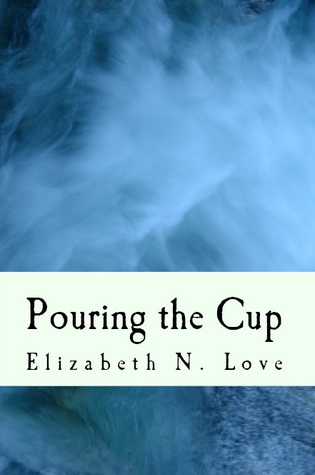
While we are still in November, I have been attempting to fulfill the 50,000 word challenge on NaNoWriMo.org. As of today, I have 35,000 of those words logged on the website. I've found this was a fabulous way to jump-start writing Book Two of the Stormflies series that starts with my recently published title Pouring the Cup. With 15,000 words to go, I have hit a slow down.  Reaching several major plot points in the first draft, and coming to what I believe is a suitable ending, now I am looking into filling in the gaps throughout the stream.  Keep in mind, Pouring the Cup contains 120,000 words.

I don't want to give away too much of this follow-up novel, and if you haven't read Pouring the Cup yet, you'll be missing key elements to understanding how the two novels will fit together. Suffice it to say, there is more hard writing to come. The characters must face several more struggles, both physical, emotional and ethical, while dealing with a globe-wide parasitic infestation.A delicate balance of emotion is necessary to keep the story from being too melodramatic or too stale.

Today would be a great day to work out more of the details of this second work. I am sick and home from the office. My husband, a teacher, brought home a bug and shared it lovingly with me. My geriatric calico cat, Jojo, and I are hanging out on the couch watching Enterprise, a series I never finished watching when it aired, and now I'm discovering why.  The inter-dimensional/alternate time-line plot carried on far too long and left too many paradoxical holes to make sense. I'm pushing through to see how it ends. At least Brent Spiner adds a plausible tie-in during the fourth season.


Remember, Pouring the Cup is available on Amazon.com
Christmas is coming! Give someone you love the gift of a good book.

Tuesday, November 12, 2013

Welcome to the Hard Story

IN THIS EDITION, when I say "the hard story," I mean the part of the fictional narrative that tries to rip your heart out every time you sit down to start a new sentence. The conflict in the story is not necessarily a harrowing physical event. A vocal confrontation can cause the same anxiety and physiological response. Fiction or non-fiction, what matters is how tied you are to your characters.

Maybe you get a sentence out, maybe a paragraph before you start to feel a lump in your throat and you just want to cry. You suck in a deep, steadying breath, return your fingers to the keyboard, and push through the emotional turmoil in hopes of capturing the inspiration that struck only moments ago. In just a few more minutes, one of the children will interrupt you, ask you if you're okay and that inspiration will evaporate while you procure a cup of milk or work on potty training.

Hopefully, a fiction writer will tell you that the characters they portray on paper represent some facet of their own personality.  I'm talking about the main characters, the people in which the writer has invested the most time and effort to make real for the audience.  Maybe the main character possesses those traits the writer most wants to see in him- or herself.  Maybe the opposite is true. My characters are part of a little family inside my head, and whatever happens to them is intensely personal.  The difference between my characters and my family is that I never wish anything to happen to my family, but my characters are expected to face conflict and danger.

To create each character profile, I draw upon a personal experience and how I reacted, or how I wish I'd reacted.  Using the personal experience as a diving board, I can launch those characters into situations in which I will never find myself.  My main characters tend to be female, since I myself am a woman, and they are introverts, observers, and thinkers. In recent years, the characters in my short stories struggle with their lack of religious belief in worlds where such lack is outside the normal expectations of the community. Each must come to terms with their exceptional-ness (I know - not a real word) or hide away, hoping to live out a life of obscurity.

Being the outsider can be extremely emotional for some people, particularly younger individuals who have not had enough time to mature and accept their differences as normal.  The world is filled with unique and interesting individuals.  There is a certain age we reach where consciousness develops the ability to reason out what makes our own self unique, what we can accept about ourselves, and what things we can attempt to change if we don't like what we see.  This is the point of "I don't care what you think. I can't be friends with everybody."  Pinpointing the age at which this development happens is somewhat impossible.  It doesn't occur at the same time for every person, and  there are some who never seem to develop this ability during their lifetime.

To write about being an outsider, it helps to have been an outsider at some point. Ever since kindergarten, I realized that certain aspects of my personality made me an outsider, some of which I could not control.  I am allergic to milk, and therefore was singled out to receive a different beverage at snack time.  I lived three miles outside of town, therefore I was not included in party invitations or playdates.  My parents were born during the great depression, stayed married for over 50 years, and had seven children together, of which I am number six. When I was in high school in the 1990s, this fact stuck out like a hammered thumb, since most of my classmates came from families with two or three children and divorced parents. For the most part I didn't care, but every teenager experiences moments where the fact that popularity passed you by hurts your heart and the world just plain sucks.

So often when I right about betrayal or sadness, that heartache is the feeling I draw upon.  If I can make my heart feel that way, I know I've written a hard story.


DECEMBER - A focus on the non-fiction writing process for the hard story.
++++
Visit Goodreads.com to enter to win a copy of my fiction novel Pouring the Cup!
BUY NOW at Amazon.com!


    Goodreads Book Giveaway


        Pouring the Cup by Elizabeth N. Love


          Pouring the Cup


          by Elizabeth N. Love


            Giveaway ends December 01, 2013.


            See the giveaway details
            at Goodreads.


      Enter to win